Monday, 10 June 2019

Byronic Origin (From Edited Fragment Of Memoir)

All extracts are from Seán Manchester's unpublished Memoir:


Once the habitat of the celebrated poet and his ancestors, Newstead would become a symbol of all that is Gothic and Romantic, which now, irrevocably, has slipped into the reservoir of fragmented memory. This is where I played as a child in the avenues of sombre forest trees in Lord Byron’s gloomy abode where the fading twilight coupled with the moan in leafy woods to herald the filmy disc of the moon.


In the year of my first pilgrimage to Lord Byron’s tomb in the company of The Byron Society whose honorary director, Mrs Elma Dangerfield, suspected a personal connection with the poet, I was still yet to hear from Professor Leslie A Marchand himself whose later correspondence in private about the“records of births and deaths of the lower (servant) class in those days” helped establish facts about the poet and Lucy, my great, great, great grandmother. Byron was seldom without consolation of the female kind and of the various servant maids who slipped between his sheets to keep him company at Newstead, Lucy was far and away his favourite. He called her Lucinda, but in a poem she appears as Lucietta.
A letter, 17 January 1809, to John Hanson confirms that “the youngest is pregnant (I need not tell you by whom) and I cannot have the girl on the parish.” On 4 February 1809, Byron wrote to Hanson:“Lucy’s annuity may be reduced to fifty pounds, and the other fifty go to the Bastard.” He had originally provided her with an annuity of one hundred pounds. Three years after making Lucy pregnant he put her in charge as revealed in a letter to Francis Hodgson, written from Newstead on 25 September 1811: “Lucy is extracted from Warwickshire [where his and her son had been weaned]; some very bad faces have been warned off the premises, and more promising substituted in their stead … Lucinda to be commander of all the makers and unmakers of beds in the household.”
Byron’s letters might suggest a callousness in his relationships that is perhaps unwarranted. When his illegitimate child by Lucy was born, he wrote a poem in which he hailed his “dearest child of love.” He had always wanted a son and Lucy provided him with his first and last. Surviving progeny that followed were all female. He composed To My Son when Lucy’s child was born:

Those flaxen locks, those eyes of blue
Bright as thy mother's in their hue;
Those rosy lips, whose dimples play
And smile to steal the heart away,
Recall a scene of former joy,
And touch thy father's heart, my Boy!
And thou canst lisp a father's name--
Ah, William, were thine own the same,--
No self-reproach--but, let me cease--
My care for thee shall purchase peace;
Thy mother's shade shall smile in joy,
And pardon all the past, my Boy!
Her lowly grave the turf has prest,
And thou hast known a stranger's breast;
Derision sneers upon thy birth,
And yields thee scarce a name on earth;
Yet shall not these one hope destroy,--
A Father's heart is thine, my Boy!
Why, let the world unfeeling frown,
Must I fond Nature's claims disown?
Ah, no--though moralists reprove,
I hail thee, dearest child of Love,
Fair cherub, pledge of youth and joy--
A Father guards thy birth, my Boy!
Oh,'twill be sweet in thee to trace,
Ere Age has wrinkled o'er my face,
Ere half my glass of life is run,
At once a brother and a son;
And all my wane of years employ
In justice done to thee, my Boy!
Although so young thy heedless sire,
Youth will not damp parental fire;
And, wert thou still less dear to me,
While Helen's form revives in thee,
The breast, which beat to former joy,
Will ne'er desert its pledge, my Boy!

To My Son, incorrectly dated 1807 by Thomas Moore, was first published six years after Byron’s death. Lucy’s pregnancy, of course, did not take place until early 1809. Moore misread the date. Furthermore, the housemaid did not die the early death of the young mother eulogised by the poet whose “lowly grave the turf has prest.” According to the housekeeper, Nanny Smith, Lucy overcame the “high and mighty airs she gave herself as Byron’s favourite,” married a local lad, and ran a public house in Warwick. The fate of the child enters the forlorn and forgotten realm of so many illegitimate offspring of servants, and does not resurface again until a century later when my Derbyshire maternal grandparents returned the bloodline to Newstead Abbey Park where they purchased twenty or so acres and had a comfortable lodge built almost within the shadow of Byron’s ancestral home. In the poem, Byron changed the scenario of Lucy’s end to conform to the sentimental moralising of the period, which required that the fallen woman must pay with her life: “The mother’s shade shall smile in joy, / And pardon all the past, my Boy!”
The poem addresses Byron’s natural child, challenging the convention that would withhold from his“little illegitmate” a father’s loving concern, along with any claim to social position. Byron’s pride, along with his sense of honour, was offended by the common practice of turning out pregnant maidservants. He knew the fate of country girls who bore illegitimate children, surviving on the pittance provided by parish poor rates, the workhouse, or making their way to the nearest city and entering a life of prostitution. Along with keeping Lucy employed, Byron made provision — exceptionally generous by the standards of the day — for her and their child in his will. Lucy was to have an annuity of £100 (later reduced to £50); the other £50 was to go to the child.
To walk the ancient corridors of the Abbey again was an unearthly experience which filled me with a mixture of strange emotions. There was the haunting drawing of Lady Caroline Lamb and many more pictures of Lord Byron. Childhood memories were stirred and I reflected on the kindred experiences of Countess Guiccioli when she saw the poet’s home for the first time — eight years after his death. Her sad journey would include a lone visit to the poet’s tomb at Hucknall Torkard. From the door, even before there was time for it to close, she prostrated herself on the flagstone that is situated above the remains of Lord Byron. There she remained for over an hour. It was evening when, in the footsteps of the Countess, I arrived at the church wherein the Byron Family Vault dwells beneath the chancel. It simply bears the name BYRON and, underneath, the date of his birth and death. I laid a wreath.
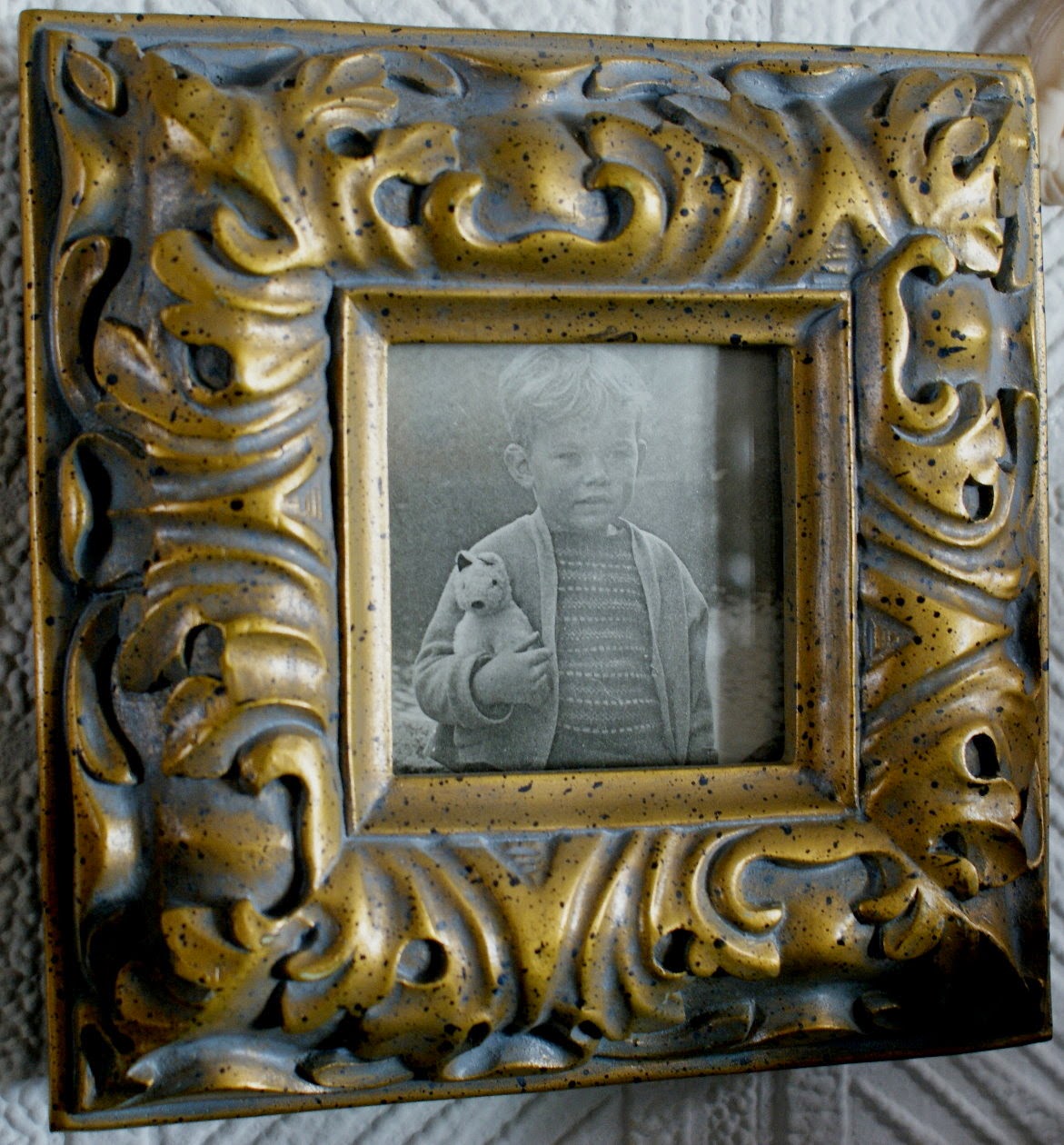
Photograph of a very young Seán Manchester.


Illustration of a very young George Byron.


Below is a copy of the altered (with crossings out) parish register of Linby (the parish closest to Newstead) that has been forensically examined. The missing text reveals: "George illegitimate Son of Lucy Monk; illegitimate Son of Baron Byron of Newstead, Nottingham, Newstead Abbey."

Sunday, 9 June 2019

Ecclesiasticism And The Summers Connection


Seán Manchester was born at a time when the world was destroying itself with war. The obscure figure who preceded him in the field of operative vampirology, Montague Summers, was still extant and soon to hand a vampire protection medallion to Seán Manchester's close friend and colleague, the prolific author and paranormal researcher Peter Underwood, now sadly deceased. Peter Underwood, in turn, would later bequeath the medallion to Seán Manchester who regards the object as a curiosity worthy of display, but little more than that. He has armoury of accoutrements rather more sophisticated, rooted in known and proven antidotes and items intended to repel vampires.


Seán Manchester nevertheless studied the works of Montague Summers while still a teenager, and has always shown appreciation to the earlier vampirologist for this introduction to the subject. He would later dedicate the expanded and revised hardback edition of his bestselling book The Highgate Vampire (1985 & 1991) to Montague Summers whose ecclesiastical career was not so very dissimilar to his own. Seán Manchester was not baptised until he made that decision himself, and, while still at school, he joined an Anglican choir, eventually being made head choirboy. During this time he became increasingly disillusioned with the vagaries of the Church of England whom, he felt, seemed uncertain about almost everything. He studied Catholicism and was received into the Roman Catholic Church, but it was at a time when Liberalism and Modernism were being ushered in by Vatican II. This made him a borderline Sedevacantist, eventually taking Holy Orders in the traditional wing of an independent group of Old Catholic churches in his country; thus enabling him to serve the autocephalous jurisdiction known as Ecclesia Vetusta Catholica. As Bishop (consecrated on 4 October 1991), he is able to carry out exorcisms unfettered, and also appoint others to do so. During his life, as his faith grew exponentially stronger, many were becoming less inclined to believe in anything, much less anything spiritual and/or supernatural. He views himself as a bulwark to such non-belief, and has remained steadfast in that resolve since entering Minor Orders in 1973.  


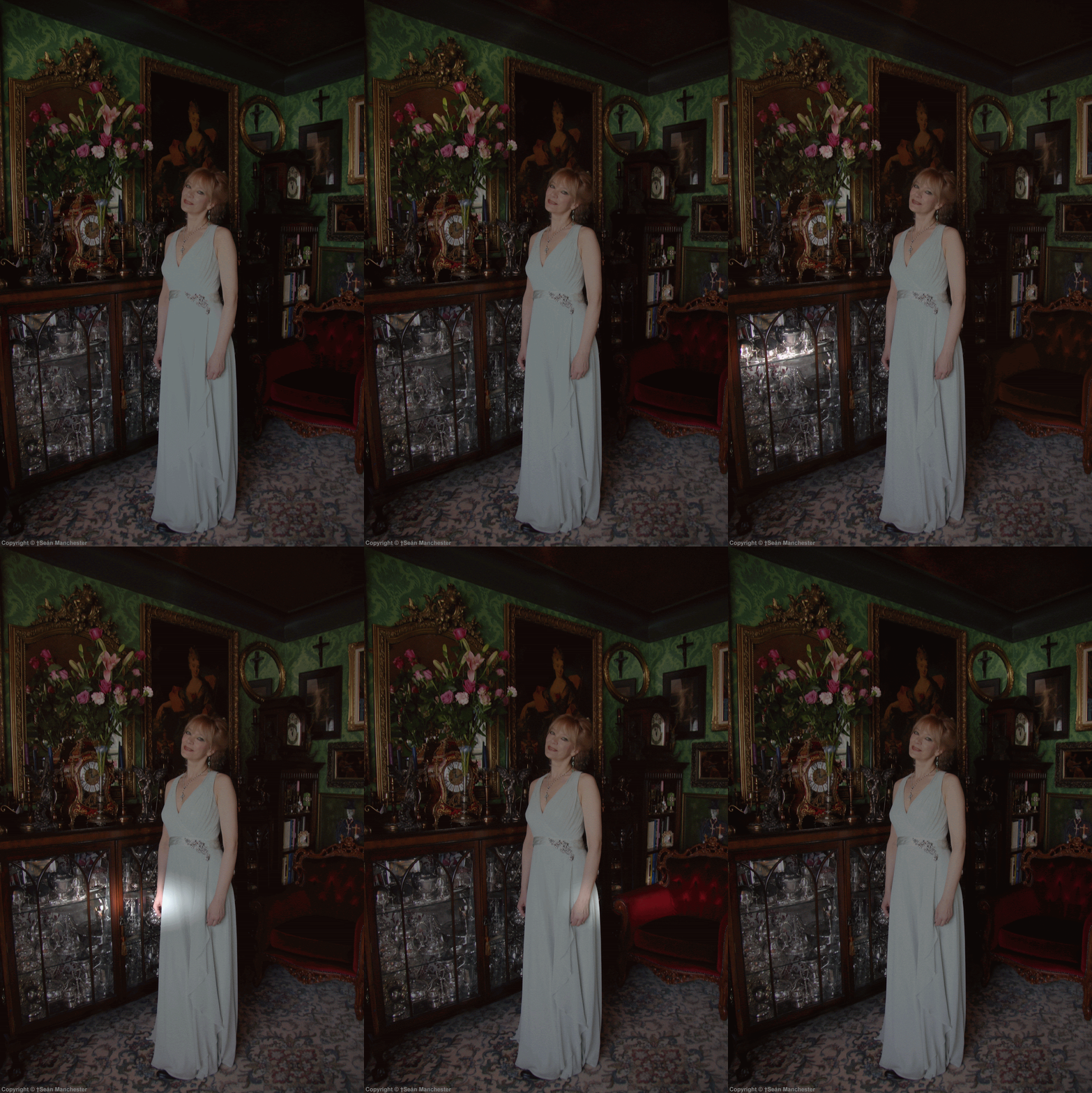
Seán Manchester founded the Vampire Research Society on 2 February 1970, and remains its President. He was also President of an occult investigation bureau from 21 June 1967 to 8 August 1988 (when the B.O.S. was formally dissolved). For most of his life he resided in London where he met and married on 8 August 1987 a performing arts graduate, who is also an accomplished designer/sculptress. He has no children, and resides at a private retreat on the English south coast. 


Seán Manchester's wife 
(photographed 20 April 2019)


The Last Vampire Hunter?


Seán Manchester's initial steps down his chosen path of vampire hunter and exorcist were taken a long time ago. He is, however, no longer a young man; yet still remains an operative (as distinct from a speculative) vampirologist in this field, an area which most who know anything at all about such arcane matters will concede is an exceptionally hazardous demonological sub-category. Is he the last of his kind? His late and lamented friend and colleague Professor D P Varma would have it that he is the "most authentic" vampirologist, but, with the passing of time, and a steady decline in belief in such things, it must be conjectured with a deep sigh that he might very well be the last of what was already an endangered breed. Even so, there are those who assist him, and many more still who support him.


Withdrawal From Public Life


Mark Knight in May 2013, who admitted being "happy but intimidated" to have an opportunity to put questions (nothing was off limits) to Seán Manchester, was informed by the latter, during the interview, when the subject of future autobiographical material arose: 

"I have written a memoir which I doubt I shall ever offer for publication. My current instruction is to have it burned to ashes upon my demise."

There is nonetheless talk of an edited fragment of his unburned memoir one day manifesting online.


Seán Manchester withdrew from public life, apropos the broadcast media, on 13 December 2013.

His final comment on the world renowned mysterious case of the Highgate Vampire was as follows:

"It was necessary to tell the full story, even though this was not an easy decision, due to the overwhelming public interest in the case, but I really now feel the subject has been exhausted and all there is to say about it has been said. It has also exhausted me after decades of television and radio interviews, film documentaries and related projects concentrating on this one topic. There will always be people seeking to cash in and exploit my work for their own ends. Many, of course, will be too young to remember the happenings at Highgate. That notwithstanding, my book The Highgate Vampire is optioned for cinematic treatment, but that is not something I wish to elaborate upon here.

"I am willing to quietly and privately set the record straight where need be, but I gave my final interview about this case to the broadcast media some years ago and have no intention of returning to the topic despite persistent requests from television and radio programmes for me to do so almost every week. I still make contributions on unrelated matters, but this subject of intense public fascination — in some cases obsession — concerning events at Highgate Cemetery more than forty-four years ago is not something I have an appetite to return to any longer. Having said that, my memoir in its unexpurgated form obviously mentions the case in a proper and fitting context to my life. However, I have no plans to have my memoir published — now or ever.

"Unimaginable horrors were experienced by folk at the time of the contagion and these I feel are best not evoked. They should be left undisturbed. The reality that I and others, most now sadly deceased, experienced all those many years ago no longer exists, and next to the hunger to experience the supernatural, albeit in this case at its most maleficent and deadly, there is perhaps no stronger hunger than to forget.

"Should an individual have a particular query about those mysterious happenings, I will give that person an answer (but not an interview); otherwise I have too much in the present with which to be concerned without reliving nightmares from the past."

The first sentence of the first paragraph (above) was quoted by Paul Adams, author of Written in Blood (2014), to an audience attending the farcical The Highgate Vampire Symposium in July 2015.


Exactly two months and one day ago, David Farrant, a man considered to be Seán Manchester's "rival" by those standing at the periphery, died after a prolonged period of ill health. If Seán Manchester was a principal protagonist in all matters pertaining to the mysterious goings-on at Highgate, his "rival" was certainly the antagonist. Yet Farrant was only mentioned once in interviews given to broadcasters by Seán Manchester, and that was on the occasion of 13 March 1970 (Today, Thames Television) to advise against the plan by Farrant to search out the vampire alone at night. This nevertheless occurred, albeit five months later, when he was arrested by police searching for black magic devotees on the night of August 17th. All of which is now bad blood under the bridge.


Saturday, 8 June 2019

When Wampyrs Walked In Highgate


It began like most days when the cold winter won't go away. The bitterness of former weeks not only intensified as the unseasonal snow refused to melt away, but somehow seemed to be growing worse.

This year is the forty-eighth anniversary of a Friday the 13th that would go down in the annals of history as the largest vampire hunt of the twentieth century. What led up to that momentous night?

Gerald Isaaman, editor of the Hampstead & Highgate Express in those far off distant days, recently recounted his meeting with Seán Manchester in February 1970: "Manchester arrived at the office wearing a black cloak lined with scarlet silk and carrying a cane." Isaaman forgot to mention the top hat and tails that were included with the opera cloak and cane. There was also an accompanying young lady, also not mentioned, who was equally formally-attired. It was late in the afternoon and Seán Manchester had no idea how long the interview that had been requested of him would take. 

He and his lady friend were dressed ready to go on to the Royal Opera House, Covent Garden, from the Hampstead offices of the Hampstead & Highgate Express. He frequently attended the opera in those days and continued to do so whilst in London, always preferring the correct dress code. 


The elderly and now ex-editor reminisced in Jauary 2009:

"The story of the Highgate Vampire [in a recently published book about London's folklore] is attributed to 1970 reports in the Ham & High, where I was then the editor. It recalled the fantastic events of a few months that year and the following one, which culminated in a TV programme inviting people to decide for themselves what was going on. That resulted in three hundred people, allegedly armed with home-made stakes and Christian crosses, storming the cemetery that night to kill the demon vampire lurking among the decaying tombs."

In fact, there was considerably more than three hundred people on the hunt that night for Highgate's vampire. They were there because of a broadcast earlier that evening which brought the case to a much wider audience. There was no announcement by the team officially investigating the mysterious happenings at the cemetery that they would be embarking upon a vampire hunt that night even though that was the case. The official hunt had been planned in private for some time.


The night of Friday 13 March 1970 witnessed in England the largest vampire hunt of the twentieth century by members of the public. It bordered on hysteria and led to local police having their leave cancelled to contain it. Just how many were involved would be difficult to estimate, but certainly hundreds. In the preceding weeks, the Hampstead & Highgate Express (a local newspaper) told of unearthly goings-on at Highgate Cemetery. Its February 27th issue ran the headline "Does A Wampyr Walk in Highgate?" The front-page headline of the following fateful week's edition told of the matter being discussed on television that very evening by Seán Manchester who recounts the event in his bestselling book The Highgate Vampire.

"... attempts to shoot the interview by the north gate were abandoned and the actual filming took place outside the main gate further down Swains Lane. Some independent witnessed, including several children who had seen a ghostly manifestation, were also interviewed for the programme. One person said: ' Yes, I did feel it was evil because the last time I actually saw its face and it looked like it had been dead for a long time.' Another witness commented: 'It seemed to float along the ground.' One of those interviewed who claimed to have seen the vampire was a certain David Farrant, a pathetic figure whose infatuation with the Highgate haunting was to earn him an undeserved notoriety and send him on a helter-skelter into the abyss of the dark occult. The programme was transmitted at 6.00pm on Friday 13 March 1970: the eve of the proposed vampire hunt. Eamonn Andrews introduced the viewing audience to a report on the Highgate Vampire. Within two hours Highgate was the scene of utter pandemonium as crowds of onlookers flocked to Swains Lane. The number multiplied as the evening progressed. Police on foot and in cars were unable to control the swarming mass of those who had arrived to witness the discovery of a modern-day vampire infestation in their midst. And its eradication! While chaos and frenzy continued to erupt in Swains Lane, a group of hand-picked researchers led by myself, constituting the official vampire hunt, made their way to the catacombs in the inky darkness of the cemetery." ― Seán Manchester (The Highgate Vampire, pages 76-77). 

Seán Manchester appeared on the Today programme (Thames Television) at 6.00pm on Friday 13 March 1970:


The night of 13 March 1970 witnessed scenes of utter pandemonium as people gathered in large numbers along the steep lane running alongside London’s Highgate Cemetery. At 6.00pm a television programme had confirmed that a vampire contagion was evident in the graveyard, and that a vampire hunt was imminent. The crowds multiplied in hopeful anticipation of locating the resting-place of the undead entity. Police were present to control those arriving, but it was an almost impossible task. By 10.00pm an assortment of independent amateur vampire hunters had joined the onlookers. Principal among the freelance brigade was a schoolteacher, fortuitously named Alan Blood, whom Matthew Bunson, as recorded in his The Vampire Encyclopedia (1993), deemed to be an important player in the unravelling case. Bunson, an American who had no contact with Blood, or indeed anyone else contemporaneous to the events at Highgate in the 1970s, relied on yet another American, Jeanne Keyes Youngson of the New York Count Dracula Fan Club aka Vampire Empire who, in turn, depended on second-hand reports amounting to personal speculation from people who were not present and played no part in the investigation.

Youngson’s influence on Bunson initiated the error in his and thereby subsequent accounts. The primary source, however, is the London Evening News, 14 March 1970, front page report “Mr Blood Hunts Cemetery Vampire.” The brief quotes attributed to Blood in this sensationalist report are notably rebutted by Blood himself in a longer interview given to the Hampstead & Highgate Express, 20 March 1970. This latter interview, reproduced in Seán Manchester’s account about the case, has been totally ignored by commentators such as Bunson who seem to have scant regard for the facts in public archives.

An authentic account of Alan Blood’s part, such as it was, in the affair is given in Seán Manchester’s The Highgate Vampire (pages 77-79) from which the following is revealed: “By 10.00pm [on the night of 13 March 1970] the hundreds of onlookers were to include several freelance vampire hunters, including a history teacher, Alan Blood, who had journeyed from Billericay to seek out the undead being.” Blood had seen a report on television some hours earlier that evening and immediately set off for Highgate. On his arrival in Highgate Village, he entered the Prince of Wales pub on the High Street, where he remained until joining the crowd outside the north gate. However, Seán Manchester, featured earlier on the Today programme as the principal investigator, was nowhere to be seen because he was already inside the cemetery with his research team.


Alan Blood in Swains Lane on 13 March 1970. 

Blood eventually left the pub and joined a steadily growing crowd of several hundred people in Swains Lane. It was while in Swains Lane that Blood, wearing a Russian-style hat with his beard, was noticed by an Evening News photographer and a reporter. They spoke to Blood, and also to a 27-year-old Hampstead resident, Anthony Robinson, who had ventured to the cemetery gate “after hearing of the torchlight hunt.” Robinson is alleged to have told the reporter: “I walked past the place and heard a high-pitched noise, then I saw something grey moving slowly across the road. It terrified me. First time I couldn’t make it out, it looked eerie. I’ve never believed in anything like this, but now I’m sure there is something evil lurking in Highgate.” Yet it was Blood, who saw and did nothing, whose photograph was to appear on the front page of next day’s Evening News. He is described at the head of the report as “a vampire expert named Mr Blood who journeyed forty miles to investigate the legend of an ‘undead Satan-like being’ said to lurk in the area.” Alan Blood had not claimed to be a “vampire expert,” and would readily confirm in a more soberly conducted interview with the Hampstead & Highgate Express, that he was “by no means an expert on vampires.”

None of which would stop American author Matthew Bunson publishing some twenty-three years later: “The focus of the media attention turned to … Allan [sic] Blood, vampire expert who led the search. [He was] convinced that a vampire was sleeping in one of the vaults and were determined to find it and kill it. … As is typical of such incidents, stories based on rumour and on unconfirmed sightings soon spread, and the tabloids and newspapers ran exploitative reports. No vampire was ever publicly discovered.” (The Vampire Encyclopedia, page 121).

Apart from his reference to press exploitation, not a single statement in Bunson’s entry for the Highgate Vampire case is accurate. The focus of the media did not turn to Alan Blood. After 13 March 1970, he completely disappeared off the scene. Blood never stated that he was “determined to find and kill” the vampire. Seán Manchester would add in The Vampire Hunter’s Handbook (pages 66-67): “Interestingly, Jeanne Youngson’s name crops up in Bunson’s acknowledgements as having assisted with this book [The Vampire Encyclopedia]. Why does that come as no surprise? Peter Hough follows in Bunson’s errant footsteps in Supernatural Britain (1995) and repeats the misinformation … whilst ignoring the actual investigation. When contacted through their respective publishers, neither deigned to reply. Their publishers also refused to answer any correspondence on the matter.” This refusal to address significant error placed on record is a matter of concern.

Bunson and Hough are followed by the journalist Tom Slemen whose latter-day paperback Strange But True (1998) claimed that “Alan Blood organized a mass vampire hunt that would take place on Friday 13 March, 1970. Mr Blood was interviewed on television. … The schoolteacher’s plan was to wait until dawn, when the first rays of the rising sun would force the vampire to return to his subterranean den in the catacombs, then he would kill the Satanic creature in the time-honoured tradition; by driving a wooden stake through its heart. … In an orgy of desecration [the crowd] had exhumed the remains of a woman from a tomb, stolen lead from coffins, and defaced sepulchres with mindless graffiti.”

None of which is true. Blood did not “organize a mass vampire hunt.” Indeed, Blood organised nothing. He was an interested onlooker. It was not the “schoolteacher’s plan to wait until dawn.” There was no “orgy of desecration” etc. No damage whatsoever occurred on the night of 13 March 1970. What Slemen is probably alluding to is an entirely different incident that took place five months later, as recorded on the front page of the Hampstead & Highgate Express, 7 August 1970, where the discovery of the headless body of a female and signs of a satanic ceremony were made by two fifteen-year-old schoolgirls as they walked through the graveyard on a sunny August afternoon. Police viewed it to be the work of Satanists and investigated it as such. Some weeks later a man was arrested prowling around the graveyard at night.

These misleading accounts by Bunson, Hough and Slemen contaminated some others that have found their way onto the internet. Sadly, some sites are simply too lazy to do anything more than copy extant error from elsewhere with scant regard for accuracy. Others have an entirely different agenda, which is to distort what really happened. Bunson’s claim that no vampire was found is patently untrue, as originally recorded in Peter Underwood’s The Vampire’s Bedside Companion (Frewin Books, 1975) and The Highgate Vampire (British Occult Society, 1985; Gothic Press, 1991).


Author and exorcist, Seán Manchester, president of the Vampire Research Society.

The tomb of the Highgate Vampire was located by the Vampire Research Society in 1970, as revealed by Seán Manchester in the 24 Hours programme, a  BBC television film documentary, transmitted on 15 October 1970, and later confirmed in Peter Underwood's anthology The Vampire's Bedside Companion (1975) and Exorcism! (1990), plus J Gordon Melton's The Vampire Book: Encyclopedia of the Undead (1994), and Seán Manchester's The Highgate Vampire (1975, 1976, 1985, 1991). Three years and three months after the BBC 24 Hours television documentary, the Highgate Vampire itself was properly exorcised by Seán Manchester with an assistant named Arthur. Several 35mm photographs, some of which are reproduced in The Highgate Vampire book, were taken of the vampire in its final moments of dissolution. These pictures were later transmitted and discussed on various television programmes in the UK.

These are the known and recorded facts about the then 25-year-old schoolteacher Alan Blood who, on 13 March 1970 travelled from Billericay to Highgate in London, having seen a report on television earlier that evening, to satisfy his curiosity. He was not a vampirologist, nor did he ever claim to be. He was one of hundreds who had turned up to see what was happening. After talking to the press he was not heard of again in this or any related context. Yet his name, perhaps understandably given the subject matter and the overwhelming interest it generated, entered a legend all of its own.

The full story of the case can be read in Seán Manchester’s bestselling book, a reliable account by a first-hand witness, participant and investigative researcher with expertise in both vampirology and exorcism. For ordering information, click on the book’s cover:

Friday, 7 June 2019

What Is A Wampyr?


The wampyr (vampire) has been defined down the ages as an accursed body which cannot rest in the kindly earth, but nightly leaves its grave to prey on sleeping men and women through whom they are believed to maintain a semblance of life by sucking thence the warm blood of such victims while they sleep. Webster’s International Dictionary confirms that the vampire is a “re-animated body of a dead person … believed to come from the grave and wander about by night sucking the blood of persons asleep causing death.” The Oxford Dictionary agrees with all the above, describing a vampire as “a ghost that leaves his grave at night and sucks the blood of sleeping persons.” Sir James Frazer in the second volume of his work The Fear of the Dead in Primitive Religions (1934) describes vampires as “malicious ghosts who issue from their graves to suck the blood of the living, and stringent measures are deemed necessary to hinder or arrest this horrible proceeding.”

They are, of course, quintessentially demonic. In certain circumstances (though these are few and far between) those who appear to expire from the parasitic undead's visitations and quaffing of their life-blood will themselves be at risk of becoming undead in their turn. This does not occur where the person is in a state of grace; where any mortal sin that stains their soul has been absolved. And by no means are the great majority of victims destined to be afflicted. It would seem that those who become undead in this way are fewer than might be imagined. This nonetheless presents an enigma where probable candidates are those who have led a life of more than ordinary immorality and unbridled wickedness; where the individual has possessed a surfeit of selfish passions, evil ambitions and cruelty. Such undead are thought to be those who have delighted in blood and devoted themselves during their life to the practice of diabolism and the black arts. Thus an undead is more likely to result from exceedingly base and cruel actions; especially where devil worship and devotion to the black arts has occurred.

The supernatural agency is demonic and, whilst human beings cannot actually transform into demons themselves, they may be possessed by them, and thus appear transformed. In the case of contamination followed by apparent expiry of a candidate there exists the possibility that their malevolence sets in action forces which might prove powerful for terror and destruction beyond the grave; though it should be emphasised that in all such cases they are not God's true dead. It is hardly to be supposed that such persons would rest undisturbed while it is less difficult to contemplate the existence of this hideous life in death where the demonic is extant and seemingly manifests itself as a corporeal form. The smallest drop of blood can be employed by a demonic entity, enabling the wraith to form in a tangible manner. Revenants are attracted to blood which allows them to effect their purpose. The ancient Israelites would not eat the blood of any flesh at all, because the life of the flesh is in the blood. The Hebrew word that translates as “life” in Deuteronomy 12: 23 (“Only be sure not to eat the blood, for the blood is the life”) also signifies “soul.”

The undead partakes of the dark nature and mysterious qualities of both revenant and demon. The exorcist must always be mindful of these alarming characteristics - not least the undead's terrible blood lust - and must never go unprotected when putting himself at risk during operative field work. Manifestation via the blood is the undead’s means of metamorphosis into a form often indistiguishable from a corpse. Since the undead do not exist in time - they dwell in what is described as "anti-time" - they will cast no shadow, nor will their reflection be seen in a mirror or water’s surface. The crucifix symbol itself is utterly abhorred by them, and indeed all forms of evil. The object and what it is made of does not possess any power, yet it is so strongly symbolic of the triumph of good over evil that it alone repels evil and whatever is an emissary of evil. However, when employed by a person the intent and faith of the person employing it is paramount. This might seem like a paradox. Christian items and holy places utterly repel evil people who oftentimes delight in their sacrilege. Likewise supernatural evil shuns these holy things and Christian images.

It is indubitably unwise for these sacred symbols to be adopted as mere fashion items. Similarly, of course, it is unwise in the extreme for diabolical symbols to be adopted and worn. So the power of the crucifix exists, but will be magnified one thousandfold when supported by a strong faith. Exorcism does not "kill" the demonic agent. It rids our sphere (or dimension) of the supernatural predatory wraith. The seemingly corporeal host once exorcised obviously returns to its true state and is no longer plagued by its supernatural ability to manifest as though it were living. All along it was neither living, nor dead. Only when properly exorcised does the unquiet soul find the peace of death.

“Whether we are justified in supposing that cases of vampirism are less frequent today than in past centuries, I am far from certain. But one thing is plain ~ not that they do not occur, but that they are carefully hushed up and stifled.” - Montague Summers (The Vampire in Europe, 1929)

Sources:

Seán Manchester

Montague Summers